En
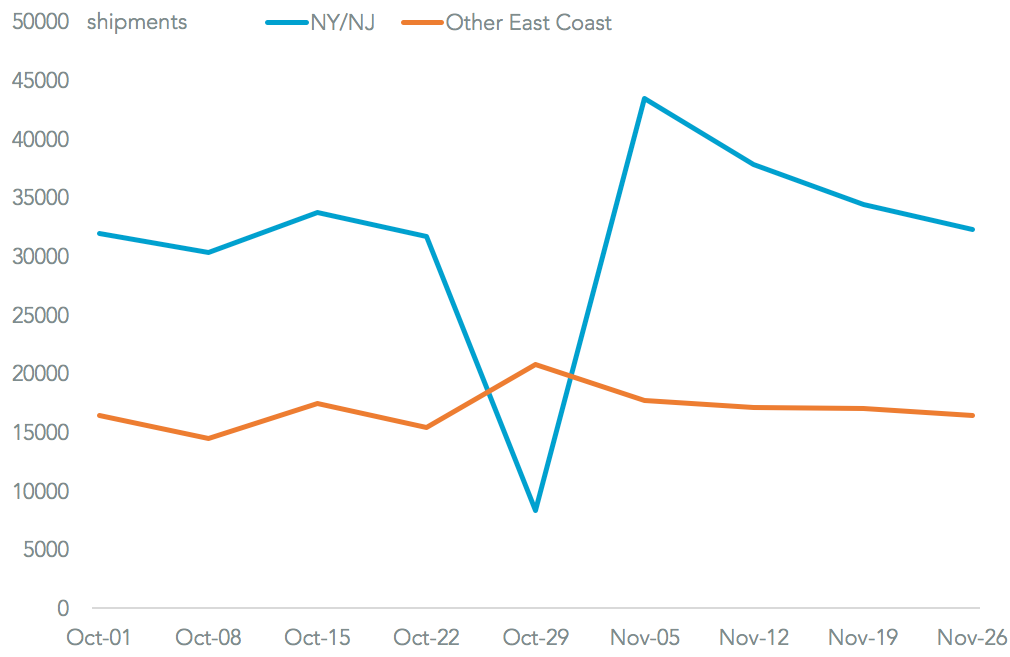
EnHurricane Sandy had much of its impact on the eastern seaboard of the U.S. between October 22 and October 29, having caused disastrous damage across the Caribbean and Eastern Seaboard. Unlike other hurricanes, however, Sandy resulted in significant storm surges on October 29 that resulted in port disruptions.
Panjiva data shows that imports to the ports of New York and New Jersey dropped to 25% of the level two weeks earlier in the week following the storm’s landfall. Around 55% of those volumes were recovered in the following two weeks through New York. Importantly though there were also diversions to ports further south which accounted for a further 15%. The remainder came later or were diverted elsewhere.
Source: Panjiva
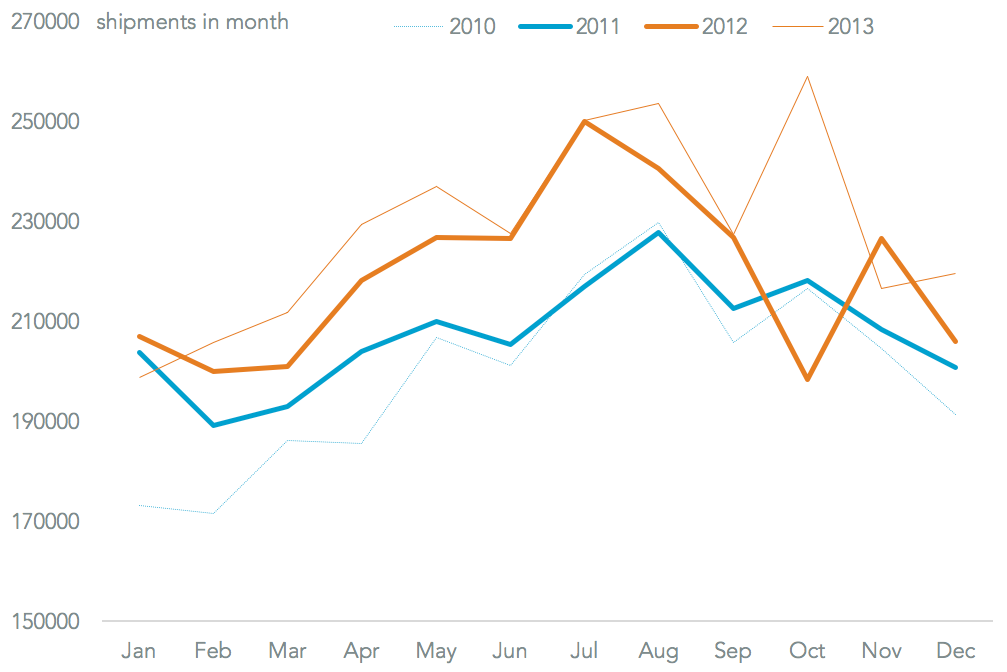
The storm also came in the midst of the peak shipping season, with October normally meeting the pre-holiday shipping rush. In that regard there was a disruption to 9% of volumes for the month, which were almost entirely made up the following month. While it is tempting to conclude that such surges are therefore manageable economically, they may become more frequent and spread further through the year. Recent challenges from Hurricanes Irma and Harvey, as outlined in Panjiva research of October 3, show recovering from port closures continues to be a fact-of-life for port operators, carriers and their customers.
Source: Panjiva